



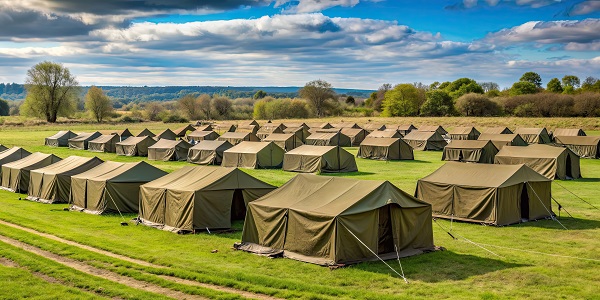
Tactical shelters have become integral to modern defense as military operations increasingly demand speed, flexibility, and reliability in uncertain environments. When permanent infrastructure is unavailable or impractical, these shelters provide structured, dependable spaces that help forces maintain order, continuity, and readiness in the field.
Tactical shelters also represent a strategic investment, enabling armed forces to extend their reach while minimizing delays, disruptions, and resource strain. As defense operations adapt to new security challenges, understanding tactical shelters clarifies how modern militaries sustain effectiveness in complex environments.
Read on to learn how tactical shelters support modern defense operations and contribute to mission success.
Rapid Deployment and Mobility in the Field
Modern defense operations often require infrastructure that can be deployed quickly without slowing mission timelines. Tactical shelters support rapid deployment by allowing units to establish operational spaces in remote or unstable areas with minimal preparation time.
For faster setup in high-tempo tactical operations, working with a provider of containerized facility solutions enables forces to deploy transport-ready structures that arrive pre-configured for immediate use. This approach improves continuity while reducing setup delays in active operational zones.
Below are the capabilities that support mobility and speed in field environments:
- Quick setup and tear-down: Lightweight frames and rapid deployable systems allow shelters to be assembled quickly with minimal tools. Modular components simplify installation and reduce reliance on heavy equipment. This shortens setup timelines and minimizes operational interruptions. Faster teardown also supports swift repositioning during shifting mission demands.
- Transport-friendly design: Many portable military shelters are engineered for airlift, ground transport, and maritime delivery. Their compact form improves load efficiency and reduces transport constraints. This enables rapid forward placement near a base camp or staging area. Streamlined logistics help maintain operational tempo in dispersed locations.
- Scalable field configurations: Flexible layouts allow shelters to expand or contract across military field bases as mission needs evolve. Units can reconfigure interior spaces to support changing personnel requirements. This adaptability helps optimize space usage in limited or contested areas. Adjustable capacity ensures infrastructure remains aligned with shifting operational priorities.
These capabilities strengthen mobility by helping units maintain momentum, reduce logistical strain, and operate efficiently in fast-moving field conditions.
Protection, Survivability, and Threat Resistance
Tactical shelters are essential for safeguarding personnel and equipment in operational environments that expose forces to physical, environmental, and hostile threats. Their design focuses on resilience and reliability, ensuring units can continue operations with minimal disruption.
The following are the protective capabilities that enhance safety and stability in the field:
- Ballistic and blast resistance: Reinforced materials and truss-style frame systems shield occupants from projectiles, explosions, and impact hazards. Shelters can absorb and disperse force to maintain structural integrity. This level of protection allows personnel to operate with greater confidence in contested zones.
- Environmental shielding: Insulated designs and weatherproof shelter features defend against extreme temperatures, high winds, heavy rain, and dust storms. Combined with climate control and environmental control systems, these shelters maintain safe, habitable conditions. Personnel and equipment remain protected despite challenging or fluctuating climates.
- Camouflage and concealment options: Visual and thermal signature reduction helps shelters blend into diverse terrains. Materials like vapor permeable tent bodies reduce visibility while maintaining airflow. Effective concealment enhances operational security and supports tactical advantages during field deployments.
These protective features ensure tactical shelters remain reliable across high-risk scenarios.
Operational Support for Command, Medical, and Logistics Units
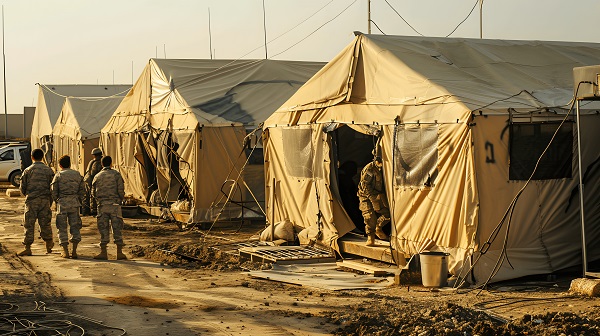
Tactical shelters serve as essential hubs for sustaining tactical operations across diverse missions. These structures can house tactical operations centers, providing space for planning, secure communications, and real-time coordination. With integrated systems, leadership teams can manage complex operations efficiently while maintaining command continuity.
In addition to command functions, shelters support critical medical operations in the field. Portable structures such as mobile hospital tents and field hospital units provide space for emergency treatment, patient stabilization, and storage of essential supplies. These setups enhance response capabilities for casualty and disease response, ensuring personnel receive timely care under operational conditions.
Furthermore, tactical shelters support logistical and maintenance needs to sustain mission readiness. Facilities for equipment warehousing and vehicle maintenance protect critical assets from environmental damage while streamlining operational workflows. For personnel, billeting areas offer secure rest spaces that improve morale and maintain performance during extended deployments.
Adaptability to Diverse Mission Environments and Conditions
Tactical shelters are designed to perform effectively across a range of environments, from deserts to arctic regions. Their modular design allows units to deploy specialty tents tailored to specific climate and operational demands. This flexibility ensures that shelters provide functional, safe, and weatherproof shelter solutions regardless of terrain or temperature extremes.
Moreover, shelters can be reconfigured to support unique expeditionary requirements. Units operating in remote or challenging locations, such as a wilderness area, can adjust layouts for command, medical, or logistical purposes. Such adaptability ensures mission continuity while accommodating operational changes without major construction or downtime.
Equally important, tactical shelters support varied operational roles along front lines and within mobile bases. Integrated mobile infrastructure enables rapid integration of communications, power, and equipment storage systems. These capabilities allow forces to maintain readiness, coordinate group activities, and sustain operations under evolving mission conditions.
Strategic Value in Long-term Defense Planning
Tactical shelters provide long-term advantages by reducing reliance on permanent structures, which lowers overall infrastructure and maintenance costs. This cost efficiency allows defense organizations to allocate resources toward other operational priorities without sacrificing readiness. Reusable expeditionary shelter systems also minimize logistical strain across multiple deployments.
Building on this efficiency, pre-stocked shelters enable forces to expand operations quickly during crises, conflicts, or humanitarian missions. Rapid access to functional units ensures personnel can respond effectively to changing circumstances, maintaining operational continuity at military field bases. This capability strengthens the organization’s ability to scale missions without delays or resource bottlenecks.
To reinforce operational consistency, unified shelter platforms simplify training, logistics, and upkeep across units. Standardization reduces the learning curve for personnel while enhancing overall mission reliability. Additionally, solution customization allows shelters to adapt to evolving operational demands, supporting integration with new technologies and strategic defense initiatives.
Final Thoughts
Tactical shelters provide modern defense forces with speed, safety, and mission flexibility. Their ability to deploy rapidly, protect personnel, support critical operations, and adapt to diverse environments makes them essential to contemporary military strategy. As defense operations continue to evolve, tactical shelters will remain a vital foundation for maintaining readiness, resilience, and operational success.