



Dr. S. S. Verma, Department of Physics, S.L.I.E.T., Longowal, Distt.-Sangrur (Punjab)-148106.
Excitonics
Excitonic systems
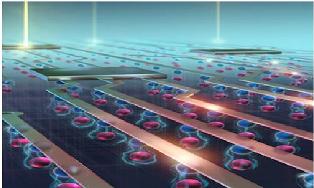
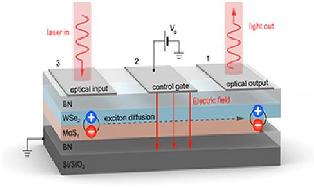
Recently, the interest has increased in excitonic systems which rely on the manipulation of these quasiparticles (excitons), similar to the way that electronic systems rely on the manipulation of electrons. Such systems, it is thought, could offer an efficient way to convert between photonic and electronic systems in communications networks and other settings, since excitons are, in a sense, natural intermediates between photons and electrons. Nowadays, researchers have begun looking at the properties of excitons in the context of electronic circuits. The energy in excitons had always been considered too fragile and the excitons’ life span too short to be of any real interest in this domain. In addition, excitons could only be produced and controlled in circuits at extremely low temperatures (around -173 ºC). Recently, scientists discovered how to control the life span of the excitons and how to move them around. The excitons in special materials exhibit a particularly strong electrostatic bond and, even more importantly, they are not quickly destroyed at room temperature. Creating a special type of exciton, where the two sides are farther apart than in the conventional particle can delay the process in which the electron returns to the hole and light is produced. It’s at this point, when the excitons remain in dipole form for slightly longer, that they can be controlled and moved around using an electric field. Practical excitonics will require devices, such as excitonic transistors, that allow “currents” of excitons to be controlled.
Developmental status
[Image: LANES EPFL]
Future applications
Further, the study is also being carried on the behavior of excitons trapped in quantum wells made of crystalline, halide-based perovskite compounds. As a result, this will able to create a scale by which labs can determine the binding energy of excitons, and thus the band gap structures, in perovskite quantum wells of any thickness. This could in turn aid in the fundamental design of next-generation semiconductor materials. Conventional photonic or optoelectronic devices are difficult to manufacture and require complex and costly growth techniques. Hybrid perovskites, colloidal quantum dots or low-dimensionality semiconducting nanoparticles pushed the door of the solution-processable materials for optoelectronics family. These new materials not only share some advantages on a technological point of view. They also target the same applications, concentrated around the generation and detection of light. They also share many common physical properties with organic semiconductors, such as tunable absorption and emission spectra in the visible spectrum. More fundamentally however, in all these novel materials, the question of the nature and properties of excitons is central. In confined systems, strongly-bound excitons guarantee that optical properties are for most part immune to the macroscopic ordering of the environment; while the low binding energies of excitons in perovskites for instance are important to explain their remarkable performance. Solar cells that turn light into electricity are optoelectronic devices. So are devices that turn electricity into light, including light-emitting diodes (LEDs) and the ubiquitous semiconductor lasers that power barcode readers, laser printers, disc players and other technologies. Excitonic materials are at the heart of green photonics , because their development is directly oriented towards the production of solar energy and low-consumption solid-state light sources; and also because these devices offer perspectives for using resources and methods that are more sustainable and have less impact on the environment than currently established technologies.
Conclusion
The researchers argue that their results make a strong case for integrating two-dimensional materials in future excitonic devices to enable operation at room temperature. Such devices, they believe, could prove more energy efficient and compact than previously demonstrated fast optical switches, the comparatively large size of which (approximately 10 microns) limits their on-chip packing density. The team concludes that excitons could revolutionize the way engineers approach electronics. The prototypes demonstrated could open the way for wider studies and applications of excitonic devices in the academic and industrial sectors. This breakthrough sets the stage for optoelectronic devices that consume less energy and are both smaller and faster than current devices. With this, it will be possible to integrate optical transmission and electronic data-processing systems into the same device. Further, it will reduce the number of operations needed and make the systems more efficient.